AI helped me get back into gaming
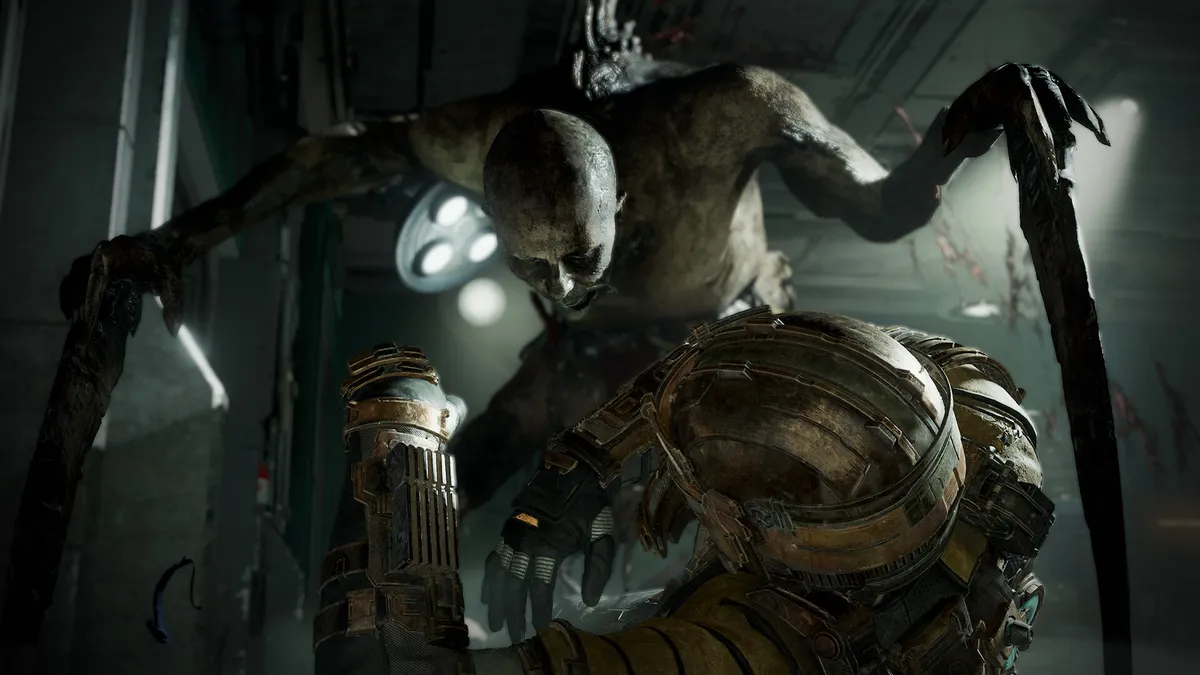 Hello and fuck you, my new favorite game
For the last three nights, I've been experiencing panic attacks aboard the USG Ishimura. Despite being a horror fan, I somehow completely missed the Dead Space games, and now I'm tearing through the remake I received as a freebie with my PlayStation Plus subscription.
The game sat in my library for far too long, gathering digital dust. Who knows if I would've gotten to it, or when, if it wasn't for AI.
STORY OF A GAMER
I've been a gamer since 1989. Three years old, sitting in an oversized chair in a small room in Sarajevo's Aerodromsko Naselje (loosely translated as Airport Settlement, the part of town next to the airport), which belonged to my uncle. He had a computer with huge old school BASF floppies, not the small ones, but the breakable big ones with large holes (hubs) in the middle.
My first games were Formula 1 (some edition of it, can't remember which), Sokoban, and the marvelous Prince of Persia, which still scares me when I remember the sound of those jaw traps, the saws that killed me so many times, and getting impaled on spikes after falling. That initial introduction to gaming worlds set me on a path for life.
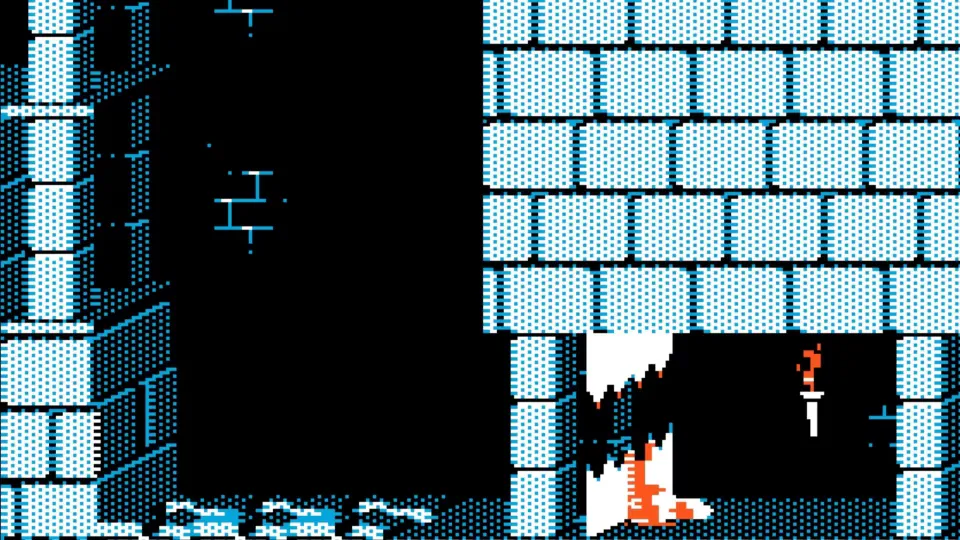 PoP jaw traps: Stuff of nightmares
In the first part of the nineties, I didn't do much gaming. I was a refugee in neighboring Croatia and didn't have a computer or anything. I remember the kind librarian at school who let me play Prince of Persia on the computer, one of the few small kindnesses I experienced as a refugee. The library was my second sacred place; I devoured books because I almost had no friends. Coming back to Sarajevo in 1996, I got my hands on my uncle's new PC and was introduced to a slew of excellent games (at least, I remember them that way) throughout the late 90s that marked my childhood. Blood (I still get the creeps thinking about the dude eating the leg on the exit screen of the shareware version), Duke Nukem, Outlaws, both Dooms, Redneck Rampage, Shadow Warrior. Around the same time frame came Diablo, Fallout, and Starcraft, different games I was interested in but too young to grasp fully (and therefore, enjoy).
In 1998, I met this wonderful woman named Ann. She was stationed in Sarajevo on a peace mission and visited our school to bring presents to the kids. I was courageous enough to approach her and tell her something was faulty with my present. Since she didn't have anything to replace the faulty toy, she decided to meet my family and me later. The replacement gift was out of this world. That's how I got my first console, the PlayStation 1, and I was immediately hooked on its colorful worlds and characters.
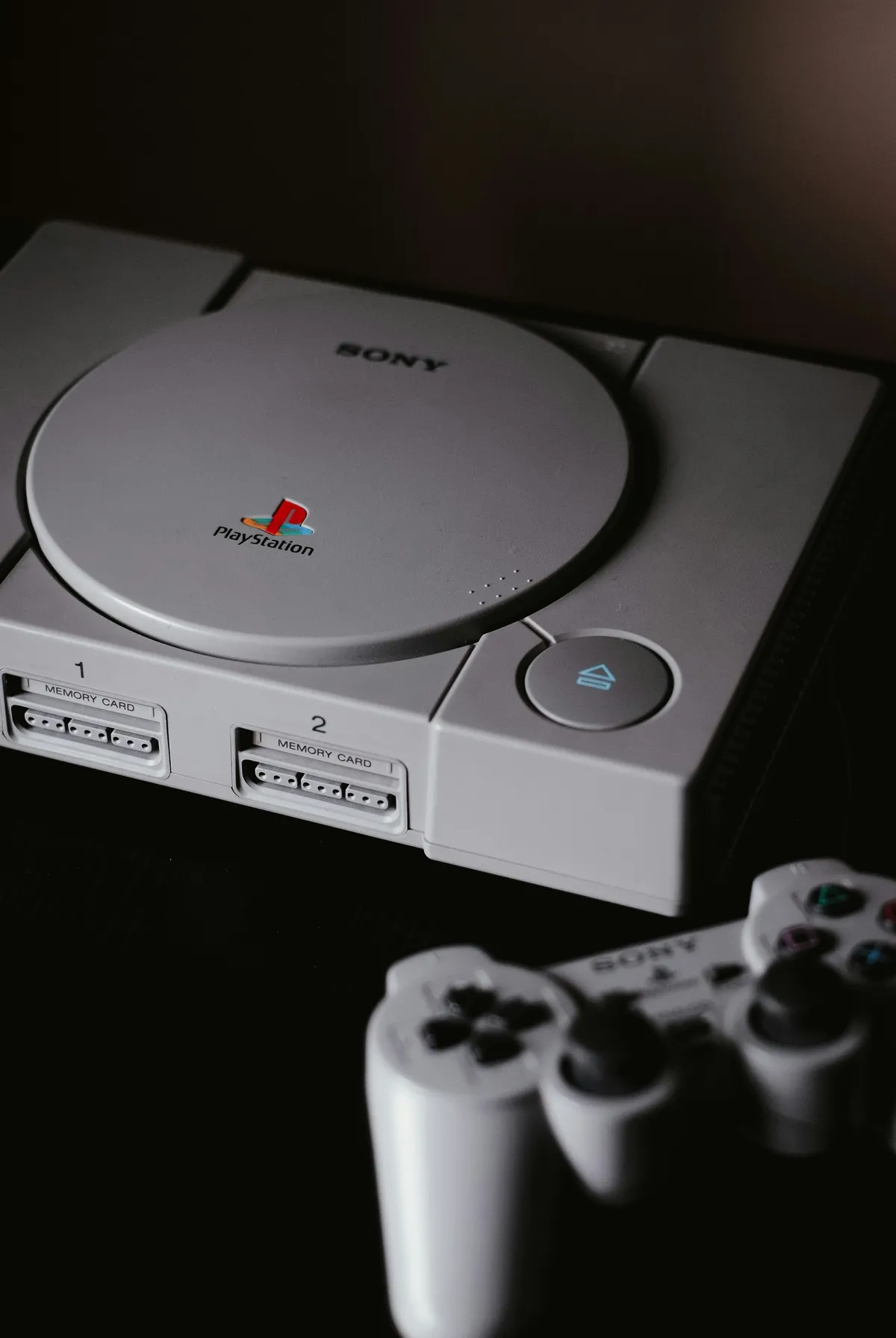 Forever in my heart: PlayStation 1
Back then, we couldn't get original games anywhere in Sarajevo, but the pirates were really well-organized, and whatever was trending in the magazines or what we first saw on demo discs, pirates had it.
WRITING ABOUT GAMES
When I entered high school, before I even knew I'd be pursuing a career in journalism, I started writing video game reviews. That completely helped me discover a new perspective on games. My first reviews are laughable when I read them now; I wouldn't say I'm a good reviewer even now, but I'm getting there. I felt especially proud when, in 2018, I was writing game reviews for a living during a short segment of my journalistic career.
The sheer intensity of my love for gaming, especially the analytical side of it, got me feeling drained as the years went by. It's nothing uncommon, as far as I can tell. It's a combination of many things: playing to write, constantly trying to keep up with trends, and, really, the biggest one, growing up.
There's a finite number of ways you can disguise gaming mechanics, but if you've played one MMORPG, you've played maybe 97% of them. The gaming challenge proved less challenging as I exited my youth and became a grown-up with responsibilities. I felt like I was playing games on autopilot, basically falling into the sunk-cost fallacy trap (I don't want to quit because I've been playing for so many years now).
One more factor weighed heavily into my gaming exhaustion: the state of the gaming world, the undoing of wonders and imagination being grinded down to a pulp by a capitalist machine, where more and more games, even single-player ones, have this live service aspect. It annoys me even when it's optional; more skins, more updates, more stuff to see, collect, unlock, battle passes, seasons. It was getting out of hand; games were becoming another job after work.
I CAN’T TAKE IT ANYMORE
So I decided to quit. By quitting, I mean I decided to analyze what was throttling my fun and enjoyment while gaming. Was it FOMO? Did I put too much effort into games I no longer want to play? Should I quit altogether? To have this analysis done, I turned to AI, or my favorite LLM. A quick word on my stance on AI: it is not a creator, it is a tool. I don't use it to create stories, brainstorm, or generate art. I use it to crunch data, search the internet in a controlled manner, check my grammar (and I make fewer mistakes, so go technology), automate repetitive tasks, and I always triple-check what I get as output.
Am I worried about the implications of AI on the modern world? Yes, I am. Am I angry about tech bros and their politics, the way they handle theft of copyrighted materials to feed their billionaire nightmares? Fuck yes, I am. Would I ever use AI to create art? Fuck no, and if you want to piss me off (like one friend of mine constantly does), take my lyrics, feed them to that monstrosity Suno, and generate a reggae version of my hardcore punk.
At the same time, am I completely aware of how quickly I can get some not-so-complex tasks done with AI? Yes, I am, and I will be using it for that very purpose because, when you reach my age, you understand that the most valuable currencies are health and time.
THE EXPERIMENT
So I turned to my LLM and explained the situation. I won't be posting the very detailed prompt I used (because it's boring, and you should write your own, not use mine).
In essence, I explained the problem I have, detailing my history with gaming, the negative aspects I currently dislike, and what I want to achieve: a plan to get back to gaming refreshed. Then I got all my games from all the consoles and PC distributions, such as Steam, GOG, and Epic, uploaded as one not-so-tidy text file. Please don't let me start explaining how I got all of these together; it was a fucking pain in the ass, and that deserves a separate blog post to commemorate my failure to get anything done efficiently.
What followed was a series of prompts in which I fine-tuned LLM answers, seeking additional explanations, suggestions, and instructions regarding gaming. What I explicitly asked the LLM to do was pay attention to what different games are achieving in terms of brain activity. Some encourage creativity, others build reflexes, and some focus on storytelling.
I explained to the LLM that there are some games I never delete off my hard disk: Pinball FX (whatever iteration I'm playing at the moment) and Euro Truck Simulator 2, which is probably my favorite game since 2013 and has been responsible for launching my very short streamer career which people loved because I drove and babbled like a radio host (that I am).
I asked the LLM to introduce a scientific component and search for scientifically verifiable sources that explored correlations between gaming and adulthood, goals and exhaustion, time management, and rekindling old passions. I asked it to be highly critical, not supportive, and to devise a gaming plan that will let me enjoy gaming as close to how I remember it, not like I used to, because I am not 10, 15, or 25 anymore.
After several hours of iterating and communicating with the machine, I got curious results. AI pinpointed the problems of my approach to gaming so far, emphasizing my lack of attention and inability to finish games I already started. Like a good machine that it is, when fed the right input, it identified "clashing game types" that, when played at the same time, actively prevented me from finishing any of them.
The results were straightforward. Euro Truck Simulator 2 and Pinball FX stay for different reasons. ETS2 stays as my podcast, shutting-off-the-brain game. Pinball FX is a quick gaming fix. However, there was a suggestion on how I should change my ways with these games after years of playing, in an effort to “restore” the feelings I once had.
The LLM pointed out I should keep gaming sessions between 60 and 90 minutes, closer to 60, which meant I need to change the way I drive in ETS2. Instead of opting for long hauls over 1000 kilometers, not finishing the delivery, feeling drained after two hours, and being unsatisfied because something was left "undone," the LLM suggested I go for shorter rides up to 300 km. After I'm done with one, I should ask myself: will I go for another one? If the answer is yes, I pick another delivery approximately 250 kilometers away. For Pinball FX, the LLM explicitly said I should set no goals and enjoy the 20-minute breaks to see where they lead me in terms of satisfaction after sessions.
As for the main game I am actively playing, it was hard to pinpoint which type I should choose because I'm a huge fan of many different genres. After a lot of prompting, we concluded that I should stick with narrative-oriented, closed-world games, almost linear in design, with campaigns lasting up to 15 hours. I should start playing on Easy Mode and up the difficulty only if I find it too easy.
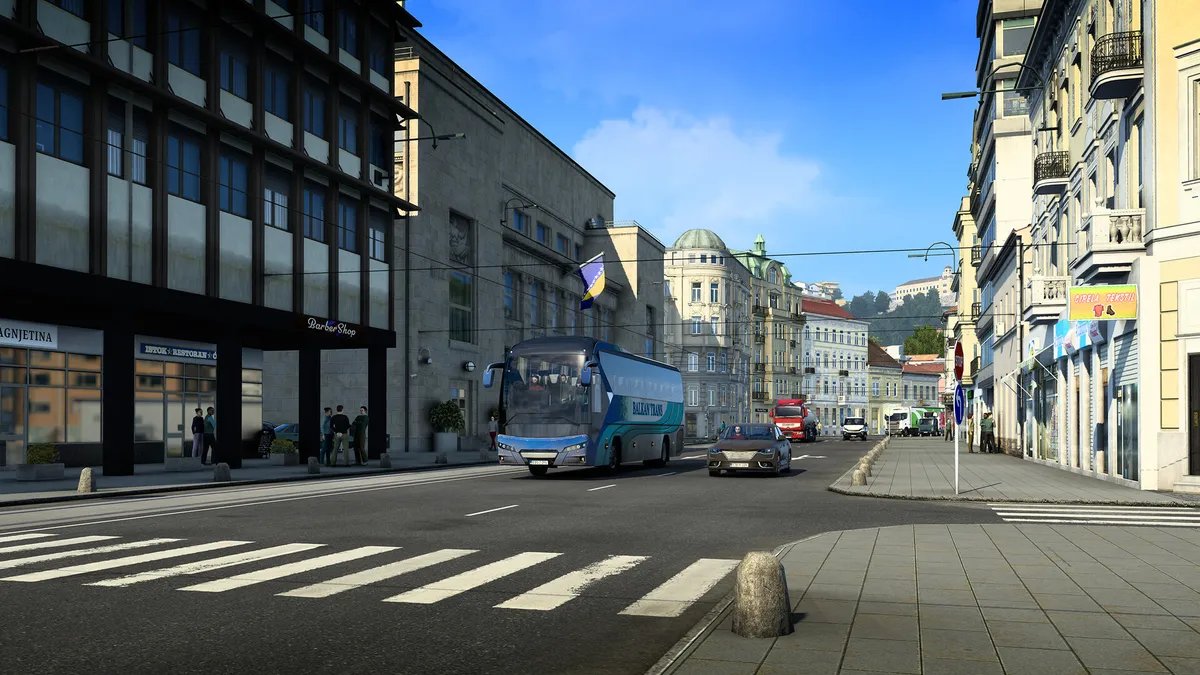 Euro Truck Simulator 2: Sarajevo. Sort off.
I shouldn't be playing two story-heavy games at once, also because I always have a book and a comic series I’m actively reading. What was also suggested is the complete avoidance (and this is proving to be a heavy part) of the thought that the game is finished once every text log is collected, every achievement is won, and every collectible is found. When the main campaign is done, it's done. Even if the game has branching ways, once you go through the story, it's done.
For this purpose, the LLM picked a slew of titles from my vast gaming library I should try playing. It explained why it picked some and not others based on my preferences. If I ever felt my next course wasn't working for me at the moment, the LLM picked a "palate cleanser," a list of games made to shift my brain energy to another type of goal.
RESULTS?
So how does it work in practice? So far, surprisingly good. Since I started this experiment, I have finished Mouthwashing, Detroit: Become Human, Horses, and Until Dawn. Four games of different lengths, completed in less than six months. This is record-breaking success I haven't been able to replicate since my teens. However, the point is not the number of games, but the levels of enjoyment I felt while playing, getting lost in the worlds, and feeling refreshed after exiting to the desktop or putting the gamepad down to charge. Detroit: Become Human and Until Dawn were two games suggested by the LLM. I chose Mouthwashing and Horses based on LLM input, so I wasn't spoonfed with game choices either. I cut my gaming sessions to 60, even 45 minutes sometimes. This proved extremely well for my ETS2 sessions.
Suddenly, my brain was firing dopamine like crazy, because I started enjoying driving again, and didn’t doze off in the middle of the gaming sessions. On other occasions, my gaming sessions were "finish one chapter" or "pass one level". Basically, by deliberately cutting my gaming session times and making sure I only got small things done instead of aiming for bigger goals, I started feeling fulfilled again.
 Horses was... WTF
I kept reiterating the system with the LLM, feeding it info about the games I play and current thoughts. What I found interesting was that the LLM tried to fall into "supportive mode" every now and then, cheering my gaming accomplishments, even though my custom instructions told it not to. Emphasis on "tried" because I easily got back into critical, objective partner mode. Back in partner mode, the LLM even warned me against starting a new game during the holiday season, saying I should enjoy what I already played and relax a little.
I failed to listen to it; instead, I asked what it thinks of Dead Space, installed it, and I’m having a blast!
This whole experiment even made me finally delete Fortnite from my PC. As the years passed, I was playing it less and less because the live service idiocy was driving me nuts. It's a lifestyle game, as my LLM puts it, and it's definitely not my lifestyle.
The problem with Fortnite is that it became somewhat of a family game, with my daughter, my ex-partner (my daughter's mom), and me going through the seasons together. The island holds the emotions. However, my daughter is growing up, and she has changed, just like the island. I realized I was holding on to the memories of what once was. That is precious, but not reality. So I deleted Fortnite, and now I'm actively seeking a round of Tekken with my daughter. Or maybe getting back to Minecraft one of these days? Who knows.
TURNING 40 AND ENJOYING GAMING
Truth be told, I'm pretty excited about my gaming in 2026. I think my newly devised gaming strategy goes hand in hand with some of my goals for the year I’m turning 40.
One of the goals of this data exchange with the LLM is to rediscover my huge backlog and stop impulse buying. I will definitely support indie studios in 2026 with my wallet, but besides that, I think the following year will be about discovering what I have among the more than 3000 titles in my library. The final reason why I'm writing this is to show opponents of AI that the technology can be useful if put to the right task. All the problems and concerns stemming from AI's sudden rise are still valid and still need to be addressed, but almost no technology is inherently good or bad, and that certainly holds for AI.
So if you're adamantly against AI, don't be against open-mindedness. Give AI a peculiar task and see what it can do to enhance your life. Now, if you'll excuse me, I have limbs to sever and mutated skulls to crush in the deep, dark space.
Thank you for reading. You can reach me via e-mail or My Mastodon profile.
Alternatively, subscribe via RSS feed.
Or, or... You can share your address with me if I decide to start a newsletter one day, and you'd like to receive it occasionally in your inbox. I won't spam or share your email with anyone, I promise!
Sharing this would be cool, too. Once again, thank you.