Less is Enough: A Case Study of-sorts
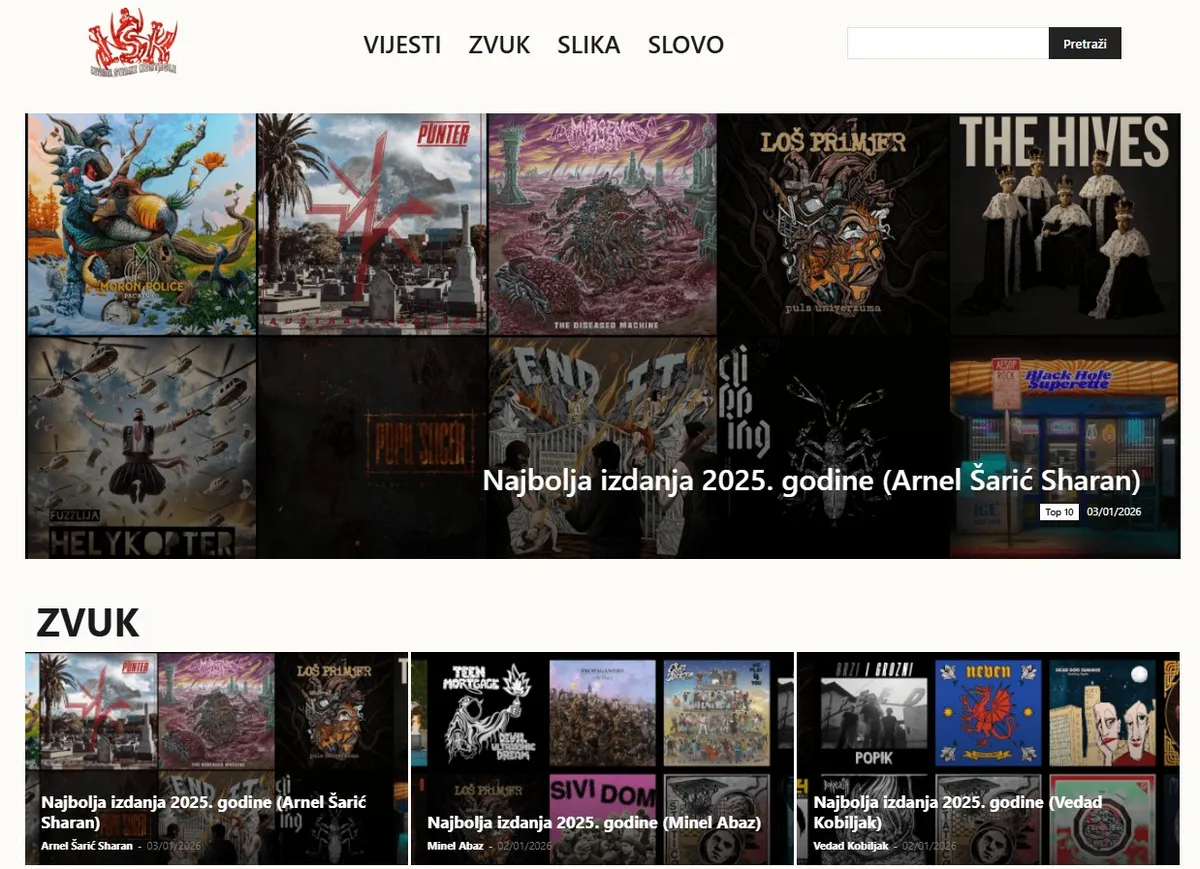
Back in 2004, I founded Izvan Svake Kontrole, an independent non-profit project that promotes the rock’n’roll subculture. What started as a radio show has grown over the years, and after 21 years, we’ve become a radio show, a TV show, a podcast, a web magazine, and a column in a local monthly newspaper. We write about bands, review albums, report from concerts, and generally try to preserve what's worth preserving in a scene that mainstream media either ignores or misunderstands.
Early last year, I made a decision that felt both terrifying and necessary: drastically cut the number of pieces we publish. Years of burnout had caught up with me. Being an active participant in the scene while simultaneously playing critic takes its toll. In 2025, it took the biggest toll, probably due to the generational gap between new, young participants and me in the scene, who couldn’t handle our sometimes harsh overview of scene elements. Add to that the shrinking number of hours I could realistically dedicate to editing ISK, and something had to give.
In 2025, we published 45% fewer pieces compared to 2024. That’s how we saved hundreds of hours of writing and editing by eliminating content that people get faster on social media anyway.
My instructions to the editorial team were straightforward: write pieces that become reference points. Write the kind of detailed coverage that stands up years later when someone wants to understand what actually happened. Be thorough in an age of superficiality.
FUCK YEAH, NUMBERS
After comparing 2024 and 2025 statistics, I have noticed unusual, but very positive results. We lost only 23% of unique visits and 18% of total page views. Views per visit increased by 9.5%. Bounce rate dropped by 2%. Visits per session rose by 13%. Remember, all of this at a 45% reduction!
2025 was also the year when AI-powered search summaries really started to mess with traffic. Media outlets worldwide found themselves in uncomfortable positions as Google and others began answering queries without sending people to the actual sources. It's hard to say how much of our decline came from that versus our own content choices. Probably a bit of both.
The traffic source breakdown is interesting. Google still leads, but direct links, such as messages sent through Messenger, Discord, wherever people actually talk to each other, came within 500 clicks of overtaking Facebook for second place. People are sharing our stuff in private conversations, which feels more meaningful than any algorithm boost.
LESSONS LEARNED
We can definitely extract some nice knowledge nuggets from this experiment. Our audience was never massive, but it's loyal. Long-form pieces like concert reports have staying power that news items don't. Social media can help growth, but ignoring it doesn't cause collapse. Technical and content SEO still matter. With social media squeezing the life out of creativity and the arts, we tend to flood people with content to stay afloat. No.
Also, there’s this very important personal lesson here.
When insufferable idiots, psychologically damaged trolls, and clueless kids start harassing you, it's perfectly fine to tell them all to fuck off. I will be 40 in a month, and after organizing gigs, writing, editing, and losing money on the music I love and the community I helped preserve in my city for 22 years, I am finally aware that I owe no one anything. I knew what would happen in 2025, and it did happen: at least three-fifths of those loudmouths stopped being involved in the culture entirely last year, stopped going to shows, stopped playing music, stopped doing anything except complaining. Still, enduring the insults, threats, and sometimes coordinated attacks wasn't easy. The time for dialogue with troglodytes has passed. Time and attention go only to those who've earned them.
IN 2026, WE WILL…
ISK continues in 2026 with the same approach outlined in the ISK Manifesto: care for subcultures, promotion, but also fair criticism of the work of local artists. We remain a portal where you don't need an ad blocker because there are no ads and never will be. As for tracking, we only collect minimized visit data thanks to excellent Plausible Analytics. We won't be creating a buyer persona out of you.
None of this would exist without the ISK team: Minel Abaz Mima, Vedad Kobiljak, Goran Salković, and Đorđe Ilić. They've volunteered for years, investing their time into an idea that belongs to all of us.
I also want to thank the small but crucial Patreon community. 23 people who've supported ISK and my other projects for years. If you want to join them, visit www.patreon.com/arnelsaric. We’re spending this money to cover the ever-rising costs of everything and to keep the content free for all. Thank you from the bottom of my heart.
Thank you for reading. You can reach me via e-mail or My Mastodon profile.
Alternatively, subscribe via RSS feed.
Or, or... You can share your address with me if I decide to start a newsletter one day, and you'd like to receive it occasionally in your inbox. I won't spam or share your email with anyone, I promise!
Sharing this would be cool, too. Once again, thank you.