The Reaper Slap
 Photo: Justin Frankel
Last night, a man named Justin Frankel walked into my living room. I was sitting at my laptop, trying to edit my podcast. He came in uninvited and just slapped me hard.
He didn't use his hand, though. Justin wouldn’t waste time with that primitive approach. He used software. Specifically, he used Reaper, the digital audio workstation he started building because he was annoyed with the tools available for making music.
Born in 1978, Justin has written thousands of lines of code that shaped the world of digital audio.
Winamp, that llama-branded MP3 revolution that defined the 90s? Justin built it in his late teens. Shoutcast, the streaming protocol that made internet radio possible? Also Justin. And Reaper, the DAW that costs $60 and somehow competes with software priced at 5 times that? Justin again, along with just one other core developer, John Schwartz.
The slap came when I tried to edit a podcast in Reaper. I figured, after years with Audition and dabbling in Cubase, FL Studio, and Studio One, I'd adapt quickly. Wrong. What took me 25 minutes in Audition stretched to an hour and ten minutes in Reaper. I was slow, inefficient, fumbling through menus like someone learning to type again.
My laptop runs Linux, the screen is cramped, and I told myself, "Forget it." Reaper isn't the right tool for podcast editing. Not for me, anyway. But I didn't dismiss it entirely. In fact, somehow I got obsessed with learning it properly.
The Problem, The Solution
Here's what matters about Reaper: Justin didn't build it to disrupt the market or chase venture capital. I highly doubt he thought about the exit strategy (after all, he’s still here). According to several sources, he built it because he wanted to play and record music, and the existing tools frustrated him.
At first, it was just for him, but today Reaper is still maintained, and it runs on Windows, Mac, and Linux from a single codebase. It's an engineering feat that makes no sense until you realize Justin doesn't operate by standard industry logic.
The pricing model reflects that. Reaper costs $60 for a personal license, $225 for commercial use if you're making serious money. Until you buy it, you get an "evaluation" license with zero functional limitations and no expiration date. It only has a nagging 5-second screen that warns you to buy a license and shows how much time you’ve spent in Reaper and how many times you’ve launched it. Other than that, it's the full version. Justin trusts you to pay when you're ready.
If this isn't an ethical approach to building technology, I don't know what is.
The Kind of Person Who Doesn't Have LinkedIn
Justin maintains a bare-bones personal site at justinfrankel.org. There's also askjf.com, where people have been asking him questions since 2009. He consistently answers the “reasonable ones”, as stated in the website tagline. From what I can gather through photos and interviews, he likes running, playing music, and assembling pedalboards.
And as far as I can tell, he doesn't have a LinkedIn profile. This fascinates me. Justin represents a kind of builder with a rare breed mentality. He solves his own problems, shares the solutions, prices them reasonably, and doesn't perform his work for an audience. He didn't build Reaper to scale a startup or sell to a conglomerate. He built it because he wanted to make music, and then he kept building it because other people wanted to make music too.
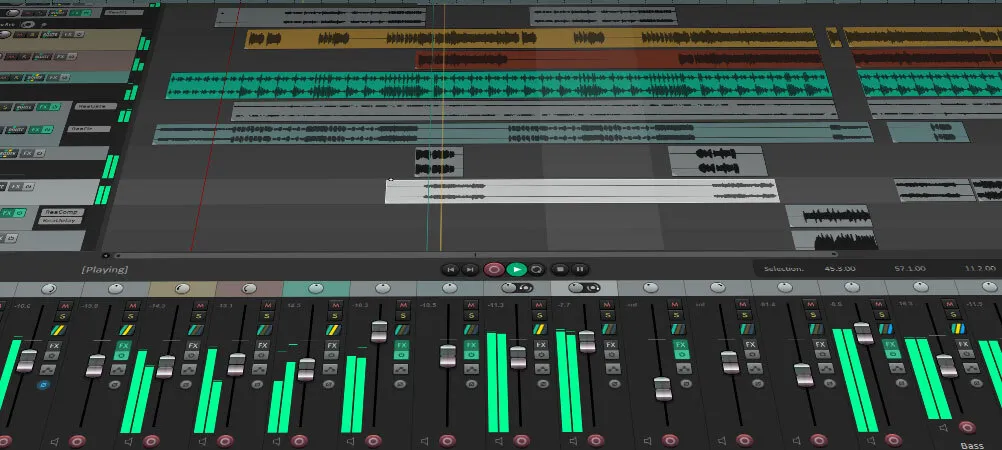 Photo: Reaper.fm
We need to talk more about people like Justin. The dominant narrative in tech insists that innovation requires massive teams, enormous budgets, growth-at-all-costs thinking, dudes hustling, venture capital destroying dreams, ads injected into everything, and a lethal dose of AI.
But here's this guy Justin, who built software that professionals rely on daily, all while maintaining a pricing structure that feels almost quaint. When we refuse technological advancements, we refuse the policies that lead workers into jeopardy and treat humans as wallets. We don’t need walled-off gardens and subscription-based tiers of hell where the depth of your money bag equals the quality of your customer service.
I’ve never seen people rebel against AI that helps summarize data to make more time for you to play catch with your kids, but it’s all-out war against AI that generates art, something so inherently human.
There's nothing broken about technology that serves people first. The slap I got from Reaper wasn't punishment. It was a reminder that mastery of the good takes time, and that the options grow for those willing to put in the effort.
I am not quite sure I’ll ever be able to become even a decent audio producer, but I’m glad Reaper exists. I'm grateful Justin built it the way he did, and I hope this letter of gratitude inspires you to give it a shot.
Thank you for reading. You can reach me via e-mail or My Mastodon profile.
Alternatively, subscribe via RSS feed.
Or, or... You can share your address with me if I decide to start a newsletter one day, and you'd like to receive it occasionally in your inbox. I won't spam or share your email with anyone, I promise!
Sharing this would be cool, too. Once again, thank you.